Gentle & Effective Chiropractic Care
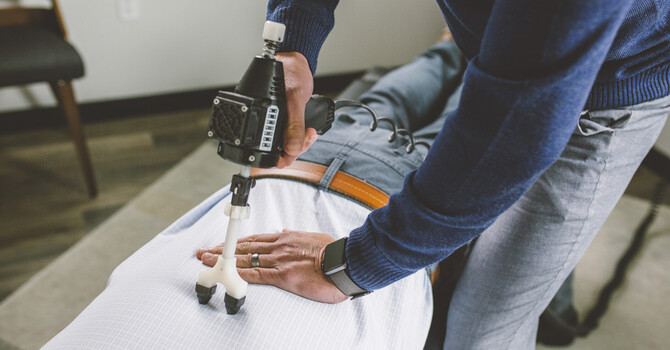
Instrument Adjusting
All the benefits of chiropractic care — no twisting, no cracking, no surprises. A precise, low-force approach that works for patients of all ages and comfort levels.
Book an AppointmentWhat Is It?
Chiropractic Without the Crack
Instrument adjusting is a low-force technique that uses a handheld adjusting tool to deliver a precise, controlled impulse to a joint — without the manual twisting or high-velocity thrust that produces the familiar "popping" sound.
The goal is the same as any chiropractic adjustment: restore proper joint motion, reduce nerve irritation, and help your body heal. The difference is simply how we get there. For many patients — especially those who are nervous about chiropractic, new to care, or dealing with acute pain — instrument adjusting may be a more comfortable fit.
At Evolve Chiropractic, Dr. Nick uses two of the most trusted instrument adjusting tools in the profession: the Activator and the ArthroStim.
The Instruments
A Closer Look at the Tools We Use
The Activator
The Activator has one of the longest track records in chiropractic. Developed in the late 1960s by Dr. Arlan W. Fuhr and Dr. Warren C. Lee — two Minnesota chiropractors working to find a gentler way to adjust — it has grown into the world's most widely used instrument adjusting technique, with over 150,000 trained practitioners globally.
The handheld spring-loaded instrument delivers a single, controlled impulse to the target joint. The thrust is so fast — faster than the body's natural guarding reflex — that muscles around the joint don't have time to tense up, which may allow for a more effective adjustment with less force.
The Activator Method has been the subject of over 150 peer-reviewed papers and more than 30 clinical trials — more research than almost any other chiropractic technique — and was the first chiropractic instrument to receive an NIH research grant.
The ArthroStim
The ArthroStim, manufactured by IMPAC Inc., takes instrument adjusting a step further with a rapid, repetitive tapping motion — delivering up to 12 precise thrusts per second. Rather than a single impulse, the ArthroStim applies a series of small, targeted forces that work together to restore joint motion.
This makes it especially useful for patients who need a high degree of specificity, or for areas of the spine and joints that benefit from sustained, rhythmic input rather than a single-thrust approach. The force setting is fully adjustable — from extremely light to firmer, depending on what the patient and the area of the body require.
The ArthroStim comes with interchangeable stylus tips for the cervical spine, thoracic, lumbar, pelvis, extremities, and trigger points — giving Dr. Nick versatility to treat the whole body with the same precision instrument.
Is This for You?
Patients Who Often Do Well with Instrument Adjusting
Instrument adjusting isn't a lesser version of care — it's simply a different delivery method. For many patients, it's their preferred choice.
Nervous or First-Time Patients
If the thought of a chiropractic adjustment makes you tense up, you're not alone. Instrument adjusting is quiet, gentle, and nothing like what most people imagine. Many patients who were scared to try chiropractic end up looking forward to their visits.
Those Who Prefer No Popping
Some patients simply don't like the sound or sensation of a manual adjustment — and that's completely valid. There's no rule that says chiropractic care has to include a crack. Instrument adjusting can deliver the same therapeutic goals without it.
Seniors & Those with Osteoporosis
Lower bone density and age-related changes to the spine may make high-velocity manual adjustments less appropriate. Instrument adjusting allows Dr. Nick to deliver effective care with minimal force — well-suited for older adults who want to stay active and pain-free.
Acute or Severe Pain
When you're in a flare-up and everything hurts to touch, starting with instrument adjusting can allow us to begin restoring joint motion comfortably — without adding to your discomfort during the early, sensitive phase of recovery.
Children & Pediatric Patients
Kids need far less force than adults to achieve the same result. Instrument adjusting is a natural fit for pediatric care — gentle enough for infants, and approachable enough that even kids who are nervous usually leave wondering what all the fuss was about.
Post-Surgical or Complex Cases
Patients with prior spinal surgeries, fusions, or hardware may not be candidates for traditional manual adjusting in certain areas. Instrument adjusting can often be used safely around surgical sites, allowing us to support your recovery and maintain mobility elsewhere.
Not Sure If This Is Right for You?
Dr. Nick will talk through your history and preferences during your first visit and help find the adjusting approach that fits your body and your comfort level.
Schedule Your First VisitYour Visit
What to Expect During an Instrument Adjustment
Assessment & History
On your first visit, Dr. Nick will go over your health history, talk through what you're experiencing, and let you know what technique — or combination of techniques — he recommends. If you have a preference, just say so.
Positioning
You'll typically lie face-down or face-up on the adjusting table — fully clothed. There's no twisting, turning, or repositioning required. Instrument adjusting works with your body in a relaxed, comfortable position.
The Adjustment
Dr. Nick places the tip of the instrument against the target area and delivers a precise, controlled impulse. You'll feel a light tapping or clicking sensation — most patients describe it as surprisingly mild. The whole adjustment typically takes just a few minutes.
Back to Your Day
Because instrument adjusting uses minimal force and doesn't involve the physical effort of manual adjusting, most patients leave feeling comfortable and ready to go. Some notice immediate relief; for others, improvement builds over the first several visits.
Conditions We Address
What Can Instrument Adjusting Help With?
Instrument adjusting can be used on its own or alongside other techniques for a wide range of musculoskeletal complaints. Click any highlighted condition to learn more.
Neck Pain & Stiffness →
Low Back Pain →
Sciatica →
Headaches & Migraines →
Mid Back Pain →
Sports Injuries →
Prenatal Discomfort →
Shoulder & Hip Problems
Extremity Joint Pain
Post-Surgical Recovery
Ready to Give Chiropractic Another Look?
Whether you've never tried chiropractic or had a bad experience in the past, Dr. Nick at Evolve Chiropractic would be happy to walk you through your options — no pressure, no surprises. A gentle approach may be exactly what you've been waiting for.
Book Online at Evolve ChiropracticEvolve Chiropractic | 19199 15 Mile Rd Ste B, Clinton Township, MI 48035 | evolvechiromi.com
