If you have ever avoided chiropractic care because of the cracking sound, you are not alone. It is one of the most common reasons people put off making an appointment. But here is something worth knowing — the crack is not actually required.
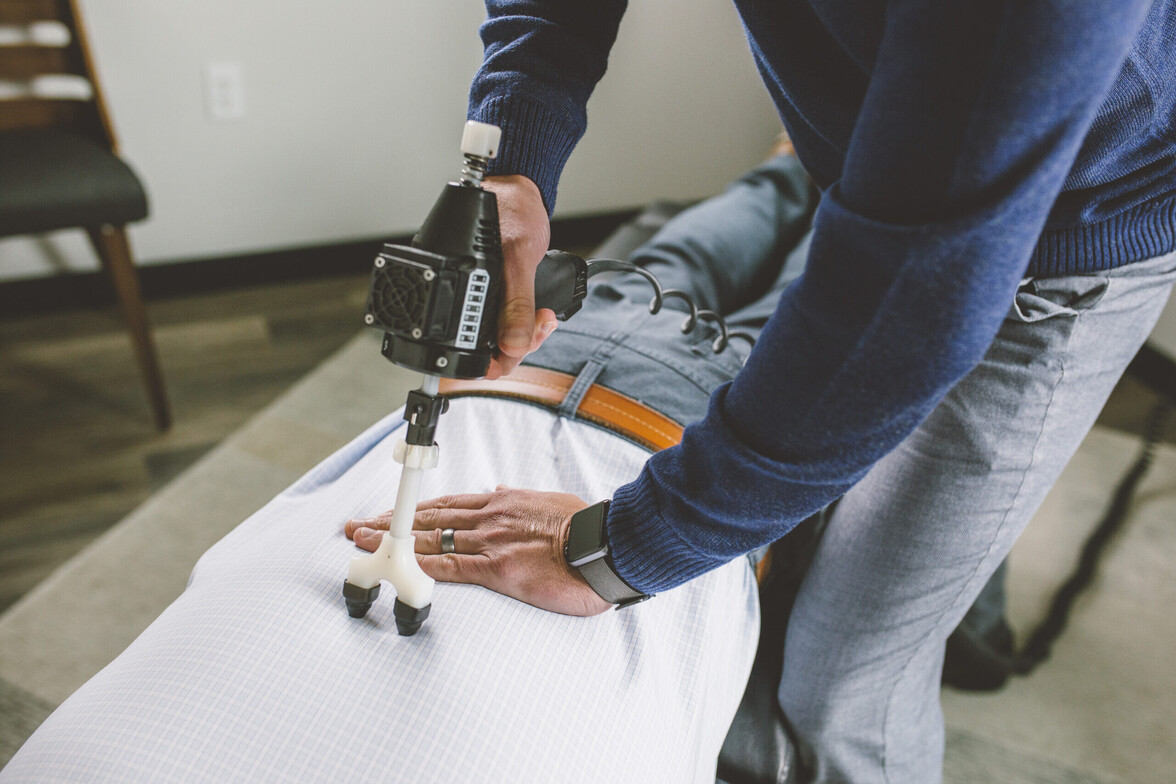
Instrument adjusting is a technique that delivers a precise, controlled impulse to a joint using a handheld device instead of a manual thrust. The goal is exactly the same as a traditional adjustment: restore proper joint motion, reduce nerve irritation, and help your body move and function the way it is supposed to. The difference is simply how we get there.
At Evolve Chiropractic, Dr. Nick uses two of the most trusted instrument adjusting tools in the profession — the Activator and the ArthroStim.
The Activator
The Activator has been around since the late 1960s, developed by two Minnesota chiropractors, Dr. Arlan Fuhr and Dr. Warren Lee, who were looking for a gentler way to adjust. It delivers a single, fast impulse to the target joint — so fast that the muscles around the joint do not have time to tense up in response, which may allow for a more effective adjustment with less overall force. It is the most widely used instrument adjusting technique in the world and has been the subject of more than 150 peer-reviewed research papers.
The ArthroStim
The ArthroStim takes a slightly different approach, using a rapid repetitive tapping motion — up to 12 small thrusts per second — rather than a single impulse. The force is fully adjustable from very light to firmer depending on what the patient and the area of the body need. Dr. Nick can swap out different stylus tips for the neck, mid back, low back, pelvis, and extremities, making it a versatile tool for treating the whole body with precision.
Who Is It For?
Instrument adjusting is not a lesser version of chiropractic care. It is simply a different delivery method — and for many patients, it is the preferred one.
It tends to be a particularly good fit for patients who are nervous about chiropractic or have had a bad experience in the past. The sound and sensation of a manual adjustment can feel intimidating, especially for first-time patients. Instrument adjusting is quiet, gentle, and nothing like what most people imagine. Many patients who were reluctant to try chiropractic end up looking forward to their visits once they experience this approach.
It is also a great option for patients who simply do not want the cracking sound or sensation. There is no rule that says chiropractic has to include a pop. If you would rather skip it, instrument adjusting can accomplish the same therapeutic goals without it.
Older adults and patients with lower bone density may also find instrument adjusting more comfortable, since it requires significantly less force than a manual adjustment. And for patients in an acute flare-up — when everything is tender and sensitive — it allows Dr. Nick to begin restoring joint motion without adding to your discomfort during the early phase of recovery.
Kids do especially well with it too. Children need far less force than adults to achieve the same result, and the gentle tapping sensation is usually much less intimidating than what they had built up in their heads.
What Does It Feel Like?
Most patients describe it as a light tapping or clicking sensation — mild, quick, and nothing dramatic. You will typically lie comfortably on the table, fully clothed, with no twisting or repositioning required. The adjustment itself usually takes just a few minutes, and most patients leave feeling comfortable and ready to get on with their day.
Some notice relief right away. For others, improvement builds gradually over the first several visits, which is completely normal depending on how long the problem has been present.
Ready to Give It a Try?
If you have been curious about chiropractic but hesitant about the manual adjustment, instrument adjusting may be exactly what you have been looking for. Dr. Nick will walk you through your options on your first visit and help find the approach that fits your body and your comfort level — no pressure, no surprises.

Nicholas Duchene
Contact Me