Low Back Pain: Causes, Symptoms, and Treatment Basics
Low back pain is one of the most common health complaints in the United States — and if you're dealing with it right now, you're not alone. Studies consistently show that back pain is a leading cause of disability and missed work, affecting people of all ages, activity levels, and lifestyles.
Whether you're feeling a dull ache after a long day at your desk, sharp pain that stops you in your tracks, or chronic back pain that has lingered for months or years, understanding what's going on in your spine is the first step toward real relief.
At Evolve Chiropractic in Clinton Township, Michigan, Dr. Nick Duchene works with patients throughout Macomb County who are dealing with all kinds of back conditions — from acute muscle strain to complex disc issues and everything in between. This guide covers the basics: what causes low back pain, what the symptoms mean, when to see a doctor, and what your treatment options look like.
Low Back Pain Basics: What You Need to Know
The lower back — also called the lumbar spine — is an incredibly complex structure made up of vertebrae, discs, joints, muscles, and nerves. It supports the weight of your entire upper body and plays a role in nearly every movement you make throughout the day.
Because of this, the low back is vulnerable. When any one of its components breaks down, gets compressed, or stops moving properly, back pain follows.
Low back pain is broadly categorized into two types:
Acute low back pain comes on suddenly, often from a specific injury or movement, and typically lasts less than six weeks.
Chronic back pain persists for three months or longer. It may have started with an acute injury that never fully healed, or it may have developed gradually over time. Chronic pain in the low back is often more complex and requires a more thorough diagnosis and treatment approach.
Common Causes of Low Back Pain
There's no single cause of back pain — it can stem from dozens of different back conditions. Understanding the possible causes helps guide proper treatment and reduce the risk of making things worse.
Muscle Strain and Back Injuries
One of the most common causes of low back pain is muscle strain. Lifting something too heavy, twisting awkwardly, or overdoing it at the gym can strain the back muscles, tendons and ligaments, and surrounding soft tissue. While these back injuries often resolve within a few weeks with appropriate care, they can become chronic if not addressed properly. Muscle spasms are a frequent companion to acute strain — the body's way of guarding the injured area.
Disc Problems and Degenerative Disc Disease
Between each of the vertebrae in the spinal column sit intervertebral discs — cushions that absorb shock and allow movement. Over time, these discs can dehydrate, lose height, and degenerate — a condition known as degenerative disc disease. When a disc bulges or herniates, it places pressure on nearby nerve roots, which can cause low back pain, leg pain, numbness, and tingling that travels down into the foot.
Spinal Stenosis
Spinal stenosis occurs when the spinal canal narrows and compresses the spinal cord or nearby nerve roots. It's especially common in older adults and can cause pain, weakness, or cramping in the legs. Aslo, symptoms that often worsen with standing or walking and improve with sitting or leaning forward.
Arthritis and Osteoarthritis
Arthritis affects the joints throughout the body, including the spine. Osteoarthritis — the most common form — involves the breakdown of joint cartilage over time. In the lumbar spine, osteoarthritis can cause joint pain and inflammation, stiffness, and pain and inflammation that contributes to chronic back pain and reduced mobility.
Spondylosis and Spondylitis
Spondylosis refers to age-related wear and degeneration of the spinal column — including the discs, vertebrae, and joints. It's essentially osteoarthritis of the spine and is one of the most common back conditions in adults over 40. Symptoms typically include a constant ache in the low back, stiffness, and reduced flexibility.
Spondylitis is a separate condition involving active inflammation of the spinal joints, often associated with ankylosing spondylitis — a form of arthritis that primarily affects the spine and pelvis. Symptoms include chronic back pain and significant morning stiffness. Early diagnosis and treatment are important to managing progression.
Sacroiliitis and SI Joint Dysfunction
The sacroiliac (SI) joint connects the base of the spine to the pelvis. Sacroiliitis is inflammation of this joint and is a commonly overlooked source of low back pain. It can cause pain in the low back, hips, and buttocks and is frequently misidentified as a disc problem.
Osteoporosis and Spinal Fractures
Osteoporosis causes bones to lose density and become brittle, raising the risk of spinal fractures — particularly compression fractures in the vertebrae. These fractures can cause sudden, severe back pain and are more common in older women, though they can affect anyone with significant bone loss.
Fibromyalgia
Fibromyalgia is a chronic condition involving widespread muscle pain, aches and pains throughout the body, fatigue, and heightened sensitivity to pressure. The low back is one of the most commonly affected areas. Because fibromyalgia affects muscles and joints broadly, it often overlaps with other medical conditions and requires a careful diagnosis.
Endometriosis
Endometriosis is a medical condition in which tissue similar to the uterine lining grows outside the uterus. Low back pain is a well-recognized symptom, particularly during menstruation. It's an important reminder that not all back pain originates in the spine — some cases are driven by internal medical problems that require a different treatment approach entirely.
Posture and Lifestyle Factors
Poor posture — especially from prolonged sitting — places uneven load on the spine and contributes to back pain over time. Excess weight increases mechanical demand on the lumbar spine, accelerating wear on the discs and joints. Sedentary habits, limited physical activity, and poor ergonomics all raise the risk of developing both acute and chronic back problems.
Pain During Pregnancy
Pain during pregnancy is extremely common, particularly in the low back and pelvis. As the baby grows and the center of gravity shifts, the lumbar spine takes on increased load. Hormonal changes also loosen the tendons and ligaments around the SI joint, contributing to instability and pain. Chiropractic care — including the Webster Technique — is safe and effective for managing back pain during pregnancy.
Symptoms of Low Back Pain
Back pain symptoms vary widely depending on the underlying cause. It's important to pay attention to not just the pain itself, but additional symptoms that help guide diagnosis.
Common symptoms include:
-
Dull, aching pain or constant ache in the low back that worsens with sitting or standing
-
Sharp pain with bending, twisting, or lifting
-
Stiffness in the lumbar spine or thoracic spine
-
Leg pain, numbness, or tingling that radiates down one or both legs
-
Muscle pain and muscle spasms in the lower back or buttocks
-
Joint pain and reduced hip and pelvic flexibility
-
Chronic pain that fluctuates but never fully resolves
-
Referred pain into the knees, hips, or feet in some nerve-related cases
Other Symptoms and When to Seek Medical Attention
Some additional symptoms alongside back pain warrant prompt medical attention. These include loss of bladder or bowel control, numbness or weakness in both legs, fever combined with back pain, unexplained weight loss, or back pain following a fall or trauma. These may signal a medical emergency requiring immediate evaluation.
How to Tell If Your Back Pain Is Serious
Most low back pain is mechanical in nature and responds well to conservative treatment. However, certain patterns suggest something more serious may be going on.
You should see a doctor if your pain has lasted more than four to six weeks without improvement. If pain is severe and not improving with rest, if you have leg weakness or progressive numbness. Also, if you've had unexplained weight loss alongside back pain, or if you have a history of cancer, osteoporosis, or immune system issues. When in doubt, getting a proper diagnosis is always the right move. Early care typically leads to better outcomes and lowers the risk of developing chronic back pain.
What Is the Cause of Lower Back Pain? A Closer Look at Diagnosis
A thorough diagnosis is the foundation of effective back pain treatment. A doctor or chiropractor will typically begin with a detailed health history and physical examination — including orthopedic and neurological tests to assess range of motion, reflexes, muscle strength, and nerve function.
Imaging may be ordered depending on the presentation. X-rays can identify changes in the vertebrae, joint spacing, and spinal column alignment. MRI is the gold standard for evaluating discs, the spinal cord, and soft tissue. Understanding the specific back pain causes for each patient — rather than just treating general symptoms — is what separates short-term pain relief from long-term recovery.
At Evolve Chiropractic, we perform a detailed intake and examination before recommending any course of care. When clinically indicated, we take in-office X-rays to assess alignment, disc spacing, and joint integrity.
Why Is My Lower Back So Stiff and Painful?
Morning stiffness and chronic low back pain that won't resolve are two of the most common complaints we hear. In most cases, stiffness signals that joints in the lumbar spine aren't moving freely. When a spinal joint loses its normal range of motion, the surrounding muscles tighten to protect the area. Over time, this pattern reinforces itself — leading to more stiffness, more discomfort, and more pain and inflammation in the surrounding tissue.
Chiropractic adjustments are designed to correct exactly this. By restoring motion to restricted joints, we reduce muscle guarding, decrease nerve irritation, and give the body the opportunity to heal.
How to Fix Lower Back Pain: Treatment Options
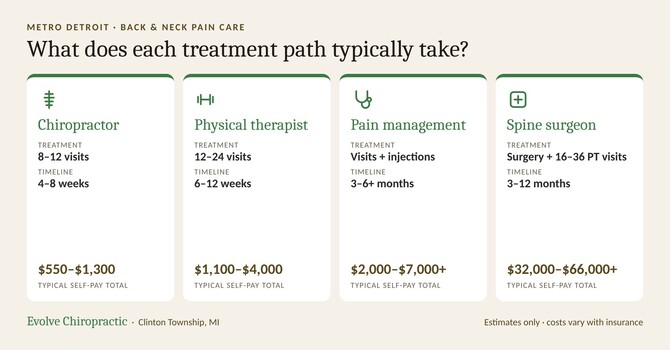
The vast majority of low back pain — even chronic cases — responds well to conservative, non-surgical treatment. Causes and treatments should always be matched. What works for a muscle strain is different from what works for spinal stenosis or spondylosis.
Chiropractic Care
Chiropractic adjustments restore proper motion to the joints of the lumbar spine and pelvis, reduce nerve irritation, and address the underlying mechanical dysfunction driving the pain. This is the core of what we do at Evolve Chiropractic. Adjustments are safe, effective, and backed by strong research for mechanical low back pain.
Spinal Decompression
For disc-related pain — including disc bulges, herniations, degenerative disc disease, and spinal stenosis — spinal decompression therapy is one of the most effective advanced treatments available without surgery. We use a KDT Neural-Flex decompression table to gently unload the disc, allow rehabilitation of disc health, and reduce pressure on the spinal cord and nerve roots.
Physical Therapy and Rehabilitation
Physical therapy and targeted rehabilitation exercises are essential to long-term recovery. A physical therapist or chiropractor trained in rehabilitation can identify muscle imbalances, movement faults, and weakness patterns that contribute to ongoing pain. Regular physical activity — even gentle movement — is one of the best things you can do for a painful back. We prescribe home exercises through our digital exercise platform to keep patients progressing between visits.
Complementary Treatments
Complementary treatments like massage therapy, yoga, and acupuncture play a meaningful role in a comprehensive low back pain care plan. Massage therapy reduces muscle tension and helps address pain and inflammation in the soft tissue. Yoga and targeted movement improve spinal mobility, strengthen supporting muscles, and support long-term spine health. These approaches work well alongside chiropractic care and physical medicine.
Medicine and Pain Relief
Over-the-counter pain relievers like NSAIDs can provide short-term back pain relief and reduce inflammation. They're a reasonable bridge while pursuing more definitive care, but they don't address the underlying cause. Prescription medicine and other medical options may be appropriate depending on severity and diagnosis — always guided by your doctor.
Surgery
Most low back pain does not require surgery. Spinal fusion and other forms of spine surgery is typically reserved for cases where conservative treatment has failed. There is often serious structural instability or a progressive neurological deficit that cannot be managed otherwise. If you've been told you need surgery, it's worth exploring conservative options first and considering a second opinion. A rehabilitation physician can help guide this decision.
Chronic Back Pain: Living With It and Managing It Long-Term
For patients dealing with chronic back pain, the goal shifts from a single cure to building sustainable habits that keep symptoms manageable and function high. This means staying active with regular physical activity, maintaining good posture, managing weight, and addressing flare-ups early rather than pushing through them.
Ongoing chiropractic care — even at a reduced maintenance frequency — helps keep the spine moving well and catches new problems before they become serious. Combined with complementary treatments and a sound home exercise routine, most patients with chronic back conditions can live full, active lives.
Neck, Upper Back, and the Connection to Low Back Pain
It's worth noting that the spine functions as a single connected system. Problems in the neck or thoracic spine often contribute to low back dysfunction, and vice versa. Poor alignment in the cervical spine can alter posture throughout the entire spinal column, adding stress to the lumbar region. Neck pain and low back pain frequently coexist for this reason.
A whole-spine approach to evaluation — rather than treating only the area that hurts — leads to better outcomes and more complete recovery.
Posture, Weight, and Reducing Your Risk
Good posture is one of the most underrated tools for back pain prevention. When the spine is properly aligned, load distributes evenly and stress on the discs and joints is minimized. When posture breaks down over time, the cumulative effect on the spinal column is significant.
Maintaining a healthy weight reduces mechanical stress on the lumbar spine and lowers the risk of developing conditions like degenerative disc disease and osteoarthritis. Other lifestyle factors that support spine health include adequate sleep, ergonomic workstations, regular physical activity, and stress management — since stress has a well-established connection to chronic pain and musculoskeletal and skin diseases.
When to See a Doctor or Chiropractor for Back Pain
If your back pain is interfering with daily life, has lasted more than a few weeks, or comes with leg pain, numbness, or weakness, it's time to get evaluated. You don't have to wait until it becomes unbearable.
A chiropractor is often the best first step for mechanical low back pain. In many cases, chiropractic care can resolve the problem without medication or surgery. For cases involving systemic medical conditions, osteoporosis, or severe neurological symptoms, coordination with a medical doctor is appropriate. If a medical emergency is suspected, seek care immediately.
At Evolve Chiropractic, we help patients determine the right care pathway. If something is outside our scope, we say so and refer accordingly.
Evolve Chiropractic: Back Pain Treatment in Clinton Township, MI
If you're dealing with low back pain, neck pain, or related spine conditions in Clinton Township, Roseville, Sterling Heights, Fraser, or anywhere in Macomb County, Evolve Chiropractic is here to help.
Dr. Nick Duchene is a Certified Chiropractic Sports Physician (CCSP) with advanced training in spine care, sports injuries, and rehabilitation. We accept BCBSM, HAP, Priority Health, United Healthcare, and Medicare.
Book your appointment at evolvechiromi.janeapp.com
Nicholas Duchene
Contact Me